
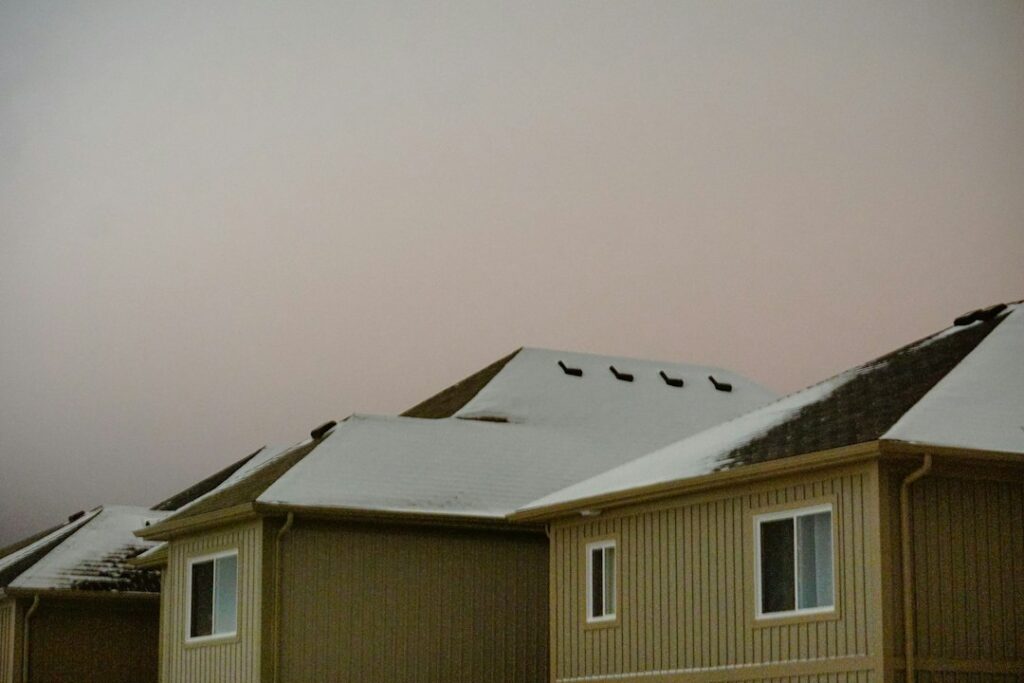
Which roof type is better for a home?
Neither flat nor sloped roofing is automatically better. The right choice depends on snowfall, drainage, attic needs, usable space, maintenance preferences, building design, and the condition of the existing structure.
For many homes in Lake Placid, a sloped roof is the more practical option because its pitch helps shed snow and rain. Flat roofs can still perform well, especially on additions, porches, garages, and contemporary buildings, but they require carefully designed drainage and more regular attention.
What is the difference between a flat roof and a sloped roof?
A flat roof is not perfectly level. It usually has a slight pitch that directs water toward drains, scuppers, or roof edges. Flat roof systems commonly use membrane materials designed to create a continuous waterproof surface.
A sloped roof has a more noticeable pitch and generally drains water through gravity toward eaves, valleys, and gutters. It may be covered with asphalt shingles, metal panels, slate, or other roofing materials.
The difference affects more than appearance. Roof shape influences how snow accumulates, how water leaves the building, whether an attic can be used for insulation or storage, and how easily the roof can be inspected.
Why are sloped roofs often well suited to Lake Placid?
Sloped roofs generally handle winter precipitation more naturally because snow and water can move toward the eaves instead of remaining across a broad, nearly level surface. That does not mean snow will always slide off, or that every steep roof is trouble-free. Snow can remain in valleys, behind dormers, near chimneys, or along roof edges.
A sloped roof can also provide:
- More attic space for insulation and ventilation
- Better separation between the occupied rooms and outdoor temperatures
- Less standing water when the roof is properly installed
- More flexibility for traditional residential designs
- Easier visual inspection from the ground in many cases
Snow shedding can create hazards, however. A steep roof may release snow or ice suddenly above walkways, entrances, decks, or parked vehicles. Snow guards, careful roof geometry, and safe placement of doors and paths may be necessary.
When does a flat roof make sense?
Flat roofing can be a reasonable choice where the building design, available space, or construction details favor it. It is common on low-slope additions, modern homes, porches, garages, and some multi-level structures.
A flat roof may be useful when:
- The building has a contemporary architectural style
- A low-profile addition is needed
- Mechanical equipment must be placed above the occupied space
- The roof will support a properly designed terrace or rooftop feature
- Interior ceiling height and exterior appearance are major design priorities
A flat roof should not be selected simply because it appears simpler. Its performance depends heavily on slope, drainage capacity, membrane detailing, flashing, insulation, and protection from ice and debris.
Are flat roofs more likely to leak?
A flat roof is not automatically more likely to leak, but it has less tolerance for drainage problems. A sloped roof can often move water away quickly even during heavy rain. A low-slope roof depends on drains, scuppers, gutters, and carefully formed drainage paths.
Leaks may develop when:
- Drains become blocked by leaves, needles, or ice
- Ponding water remains for extended periods
- Membrane seams separate
- Flashing around walls, vents, or curbs deteriorates
- Ice pushes against edges or penetrations
- Snow removal damages the roof surface
Small areas of standing water after rain do not always mean the roof is failing. Persistent ponding, soft spots, repeated leaks, or sagging should be treated as warning signs.
Which roof is easier to maintain?
Maintenance depends on the roof system, not just its shape. Flat roofs are often easier to reach for inspection, but that convenience can lead to overlooked drainage problems because people assume a walkable roof needs little attention. Sloped roofs may be harder to access safely, yet their surfaces are often easier to evaluate from the ground.
Flat roof maintenance commonly includes checking:
- Drains and scuppers
- Membrane seams
- Edge metal
- Flashing
- Ponding water
- Rooftop equipment supports
Sloped roof maintenance commonly includes checking:
- Shingles or metal panels
- Valleys and roof-to-wall transitions
- Chimney and vent flashing
- Gutters and downspouts
- Ice damage
- Areas where branches or snow frequently collect

Any roof inspection involving steep slopes, unstable surfaces, heavy snow, or suspected structural damage presents a fall or collapse hazard. Those conditions require appropriate safety measures rather than casual walking on the roof.
Which roof costs less over time?
Initial cost varies widely. A simple sloped roof may be economical, but complex designs with multiple valleys, dormers, skylights, or steep pitches can become expensive. A flat roof may use fewer framing materials, yet high-quality membranes, insulation, drainage components, and edge details can add substantial cost.
Long-term cost depends on:
- Expected service life of the roofing material
- Frequency of inspections
- Snow and ice exposure
- Ease of locating and repairing leaks
- Drainage maintenance
- Insulation performance
- Whether the roof design creates difficult transitions
The least expensive installation is not always the least expensive roof. Poor drainage or inadequate insulation can create repair costs, interior damage, and energy loss regardless of roof shape.
How does roof shape affect insulation and energy use?
Both roof types can be energy efficient when insulation and air sealing are designed correctly. A sloped roof may allow insulation at the attic floor or along the roofline. A flat roof typically requires insulation within the roof assembly because there may be little or no attic space.
For cold winters, the roof assembly should control heat loss, air leakage, moisture movement, and ventilation. Warm areas beneath the roof can contribute to uneven snow melting and ice formation along colder edges. Proper insulation reduces this risk but does not eliminate it when ventilation, air sealing, or drainage details are inadequate.
A roof replacement is often an opportunity to review attic insulation, ventilation paths, and areas where indoor heat may be escaping.
What should homeowners check before changing roof type?
Changing from a flat roof to a sloped roof, or the reverse, is not simply a roofing-material decision. It may affect rafters, trusses, walls, drainage, insulation, exterior appearance, snow loads, and interior ceiling heights.
Before changing the design, consider:
- Whether the existing walls and foundation can support the new loads
- How snow will collect or shed
- Where gutters, downspouts, and drains will discharge water
- Whether the roof meets current building requirements
- How the change affects attic ventilation
- Whether new roof geometry creates valleys or snow pockets
- How nearby doors, windows, decks, and walkways may be affected
State building requirements address structural loads, roof assemblies, drainage, and weather protection. Older buildings may also have been designed under different standards than those used today, so an existing roof should not be assumed to meet current expectations simply because it has lasted for many years.
So, which roof is right for you?
For a typical house in Lake Placid, a properly designed sloped roof is often the practical choice for snow shedding, attic insulation, and conventional residential construction. A flat roof can be appropriate for a modern structure, addition, garage, or low-profile design when drainage and winter detailing are handled carefully.
The most useful question is not whether one shape is universally superior. It is whether the roof design matches the building, climate, structure, drainage plan, insulation strategy, and maintenance habits. In snowy conditions, workmanship and detailing usually matter more than appearance alone.
